Start your career in Web3 with our flagship 12-week program, in association with

Apply Now
.png)
Conducting a technical interview can be a challenge, while there are a lot of articles and blog posts on preparing for a technical interview, there are only a few on how to conduct one.

Conducting a technical interview can be a challenge, while there are a lot of articles and blog posts on preparing for a technical interview, there are only a few on how to conduct one. Many established procedures on conducting one turn out to be inadequate and lead to companies overlooking strong candidates.
Technical interviews are often intense and require you to prepare yourself as both the buyer (hiring a candidate) and the seller (representing your company’s interests and culture). A lot of thought and a solid framework is required in conducting a technical interview that can demonstrate a candidate’s hard skills as well as soft skills and help you find a person that will be able to add value to your team/organization.
Moreover, it’s extremely important to remain ethical and adopt a standardized rating system to assess a candidate to ensure that everyone is on the same page before the interview. The best technical interviews are designed to determine the candidate’s motivation, their areas of expertise and how exactly they’ll fit in the role that you’re offering. Such a plan will ensure that the company will keep getting quality hires consistently.
In this article, we highlight some important points to keep in mind for different stages of conducting a technical interview.
First and foremost, before creating any technical interview, one should have a clear picture of what the company wants. Bring in your tech teams together to understand what the hired person should be able to do:
Usually, expectations change while the job description remains the same, look at your top performers to identify what makes them so valuable for the company, what skills they possess and what they have in common. Write it down! A written description of attributes that you’re looking for is a must to ensure that it accurately reflects what is required of a person.
Once you have a defined role, you have to plan the structure for the interview. Generally, technical interviews last for 45–60 minutes. You have to make sure that you make the candidates code and maximize the candidate’s work time so that you can assess their abilities. You can allocate the time slot as follows:
The coding test is often done in the form of a ‘whiteboard interview’. While whiteboarding is effective in assessing a candidate’s coding and problem-solving skills, it turns out to be messy and can be an overwhelming experience for them.
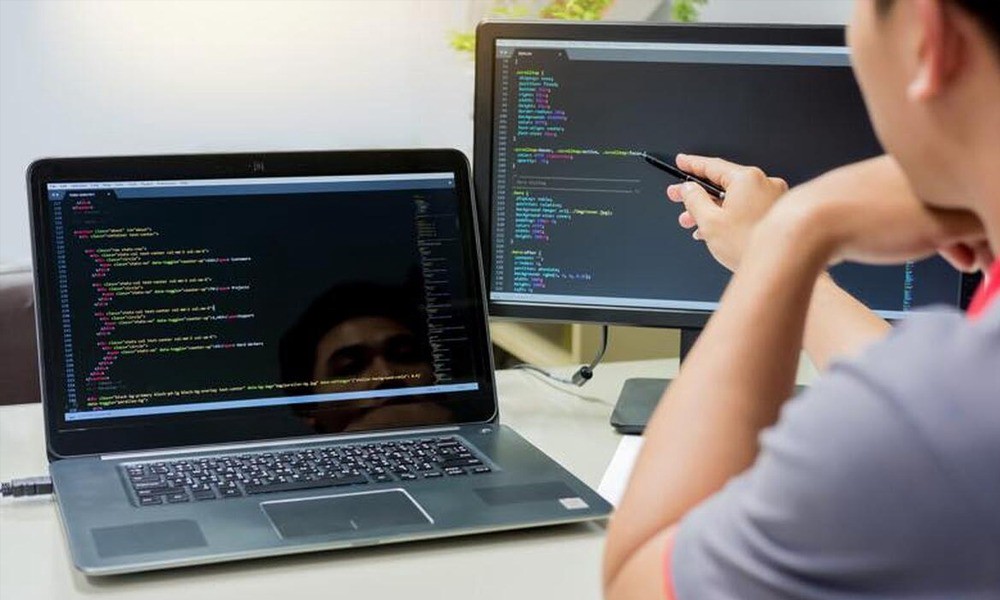
It’s much easier to code on a computer and also neater to understand. Hence, making them code on a computer is a smoother option. You can ask the candidates to bring their laptops or provide them with one during the interview.
With an interview structure in place, you can start preparing your questionnaire. When it comes to creating tasks, you should prepare a standard set (write it down!) so that you can assess your candidates on an equal footing. Here are a few tips to follow for setting the technical part of the interview:
You can check out GitHub’s list of technical interview questions for front-end and back end developers. Non-technical questions will be discussed in the ‘During the Interview’ section.
Before you provide the task to the candidates, test it on your coworkers/teammates under the same interview constraints. Make a clear note of their approaches, the time taken to finish the task, where they got stuck, etc. There are multiple benefits to it:
Though testing the task beforehand requires you to put in some extra effort, overall, it’s a good strategy to make the interviewing process much more meaningful.
What makes technical interviews challenging for recruiters is that they usually don’t have the same technical skill set that is desired in the candidate. To make life better, it is important to have a good mix of people in the room to eliminate hiring biases.
It’s often said that employees are as good as the hiring team, here are a few traits of a great panel:
It’s always a good idea to include those who tested the task beforehand on the panel, they can be really helpful in navigating through the interview and assessing the technical skills of the candidates.
While resumes today are not a judge of someone’s true potential, they still offer a lot of insight into the candidate.
Beginning with your introduction, be it formal or informal sets the stage for the interview. This is the part where you’ll get to ask non-technical questions to the candidate or screen the candidates for their soft skills i.e. communication and time management, overall personality and attitude towards work, ability to lead, etc. While technical questions are the focus of any technical interview, the person should also be able to fit perfectly into the team.
Accounting for nearly 70% of the time, this is the highlight of the interview, based on which you’ll decide whether the candidate fits into the role. As said earlier, make your candidates code on a computer instead of a whiteboard. Here’s how you can go about it:
For a detailed reading on the coding/programming part, read this brilliant blog piece.
Once the candidate finishes or the allotted time has passed, you can start questioning how they accomplished the task provided to them. Though by now, you would have got a fair understanding of their technical skills, asking further questions can help in improving that understanding
We have finally come to the end of the interview, the panel can now meet to exchange their notes and discuss their experience with the candidate. Each member should individually express how they feel about the candidate. The panel can then critically analyze the feedback and decide whether to offer the job or shortlist for the next stage of the interview. Take a look at a few points that will help you make your mind
In this article, former Amazon VP, Neil Roseman says that the expectation should be to hire better people than when you were hired. Ultimately, you want someone smart, can take charge, lifts the team’s spirit and is a fun person to work with!